Americas · Cruise destination guide
Panama Canal Cruise Guide: Full and Partial Transits Explained
Short answer
What should you know before booking a Panama Canal cruise?
A full Panama Canal transit crosses ocean to ocean over 14 to 16 nights, typically Fort Lauderdale to Los Angeles, from about $1,180 per person. A partial transit enters Gatun Lake from the Caribbean and reverses out the same day on a round-trip sailing, from about $980. Best months are December through April. The full transit is the bucket-list version; the partial fits the locks into a standard-length holiday at about $200 less. The fares here cover fourteen-plus nights, so the per-night cost, roughly $70 to $85, is gentler than the headline number suggests. The partial clears only the Atlantic-side locks, which for most first-timers is the experience that matters.
Key takeaways
- A full transit takes eight to ten hours and crosses between the Atlantic and the Pacific.
- A partial transit enters the canal, reaches Gatun Lake and reverses out, taking about six hours.
- Most cruise ships use the original 1914 locks; only the largest use the 2016 Neopanamax locks.
- Transit day starts before dawn, so book a forward-facing cabin or plan to be on deck by 6am.
- Dry season, mid-December to mid-April, is far more comfortable than the wet season.
Overview
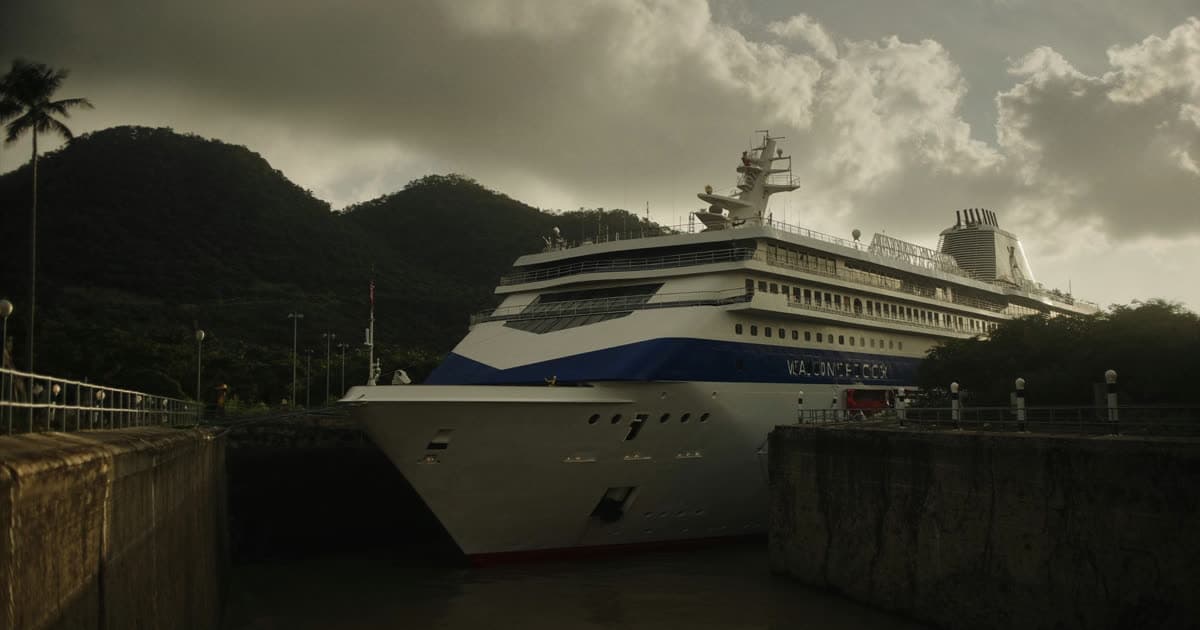
The Panama Canal is the only cruise destination where the highlight is a piece of infrastructure, and it earns that status. Watching a 900-foot ship rise 85 feet through three lock chambers, with the walls close enough to touch from a balcony, is genuinely remarkable, and it takes most of a day.
The critical distinction is between a full transit and a partial transit. A full transit crosses ocean to ocean, taking 14 to 16 nights and finishing in a different country from where it started. A partial transit enters the canal from the Caribbean side, ascends into Gatun Lake, then reverses back out and continues a round-trip Caribbean cruise.
Partial transits are cheaper and shorter and give you the Gatun Locks experience, which is the visually impressive part. Full transits give you the whole crossing, the Culebra Cut and the Pacific-side Miraflores Locks, plus a genuinely different itinerary on each coast.
The canal runs 82 kilometres between Colon on the Caribbean side and Panama City on the Pacific. Ships are raised 85 feet to Gatun Lake through a series of locks, cross the lake and the Culebra Cut, then descend back to sea level on the other side.
Two lock systems operate. The original 1914 locks handle Panamax ships up to about 106 feet wide. The Neopanamax locks, opened in 2016, handle much larger vessels. Most cruise ships still use the original locks, and this is what you want: the chambers are narrower, so the walls are close and the experience is far more dramatic.
Ships built specifically to fit the original locks, such as Coral Princess and Island Princess, are known as Panamax ships. Larger vessels using the Neopanamax locks sit in the middle of a much wider chamber and the effect is diminished.
- Ships rise 85 feet to Gatun Lake and descend again on the far side.
- The original 1914 locks give a much better experience than the newer Neopanamax locks.
- Full transit takes eight to ten hours; partial transit about six.
- Transit day begins before dawn, usually around 5.30am.
The best time to go
Panama has a pronounced dry season from mid-December to mid-April and a wet season for the rest of the year. The difference is dramatic: the wet season delivers heavy afternoon downpours most days, and standing on deck for eight hours in that is unpleasant.
January through March is the recommended window, and it is also when most cruise lines schedule their transits.
| Month | Weather | Transit availability | Fares | Verdict |
|---|---|---|---|---|
| December | Dry season begins mid-month | Good | Rises sharply at Christmas | First half of December is excellent value |
| January to March | Dry, 88F, low humidity for the tropics | Peak availability | High | The best months, and the busiest |
| April | Dry until mid-month | Good | Moderate | Early April is a strong value window |
| May to August | Wet, heavy afternoon rain | Limited | Low | Uncomfortable on deck for eight hours |
| September to October | Wettest months | Very limited | Lowest | Avoid unless price is the only factor |
| November | Wet, easing late | Repositioning sailings begin | Low | Late November repositioning fares are good value |
The ports, honestly assessed
Panama Canal itineraries pair the transit with Central American and Caribbean ports. The transit is the point; the ports are supporting material, though several are genuinely good.
ColonPanama
The Caribbean-side entry. The Gatun Locks visitor centre and the Panama Canal Railway are the two worthwhile excursions.
Fuerte AmadorPanama
The Pacific-side anchorage serving Panama City. Casco Viejo, the old quarter, is excellent and a 20-minute taxi.
Puerto LimonCosta Rica
Rainforest aerial trams and Tortuguero canals. One of the better wildlife port days in the region.
PuntarenasCosta Rica
The Pacific-side Costa Rica call. Manuel Antonio National Park is a long transfer but is the best wildlife day of the cruise.
CartagenaColombia
The best port on any Panama Canal itinerary. The walled old city is a UNESCO site and walkable from a short taxi.
CorintoNicaragua
Leon and the colonial churches, plus volcano boarding at Cerro Negro for the adventurous.
HuatulcoMexico
A Pacific-side call on westbound transits. Nine bays, good snorkelling, low-key.
Cabo San LucasMexico
The final call before Los Angeles on most westbound transits. Tender port.
Weather, month by month
Panama sits nine degrees north of the equator, so temperature barely varies. Rainfall does, enormously, and it is the only weather variable that matters for a transit.
| Month | High | Low | Sea | Rain days | Notes |
|---|---|---|---|---|---|
| December | 87F | 75F | 82F | 12 | Dry season begins around 15 December. Second half is much better than the first. |
| January | 88F | 75F | 81F | 4 | Driest month. Ideal transit conditions. |
| February | 89F | 75F | 81F | 2 | The best month for a transit. Almost no rain. |
| March | 90F | 76F | 82F | 3 | Hot and dry. Excellent visibility through the Culebra Cut. |
| April | 90F | 77F | 83F | 8 | Rains return mid-month. Book the first half. |
| May | 88F | 76F | 84F | 17 | Wet season properly underway. |
| September | 87F | 75F | 84F | 19 | Wettest month. Very few cruise transits scheduled. |
| October | 86F | 75F | 84F | 20 | Peak rainfall. Repositioning transits begin late in the month. |
| November | 86F | 75F | 83F | 18 | Wet but easing. Repositioning sailings offer good value. |
What it actually costs
Panama Canal cruises are priced by length rather than by destination premium, so a 15-night full transit costs less per night than a seven-night Caribbean sailing on the same line.
The hidden cost is the one-way structure. A full transit ends in a different city from where it started, so you need two separate flights rather than a round-trip, which typically adds $150 to $350 per person.
| Cost item | Partial transit, 10 nights | Full transit, 15 nights |
|---|---|---|
| Cruise fare, interior | $980 to $1,380 | $1,180 to $1,680 |
| Cruise fare, balcony | $1,480 to $2,080 | $1,920 to $2,720 |
| Per night, balcony | $148 to $208 | $128 to $181 |
| Flights | Round-trip, $280 to $520 | Two one-ways, $430 to $870 |
| Taxes and port fees | $180 to $260 | $260 to $390 |
| Gratuities | $180 | $270 |
| Excursions | $300 to $600 | $500 to $1,000 |
| Realistic total, balcony | $2,400 to $3,700 | $3,400 to $5,200 |
Popular itineraries
There are four recognisable Panama Canal itinerary shapes, and the choice between them is mostly about whether you want the full crossing.
Full transit, Fort Lauderdale to Los Angeles
from $1,180 per person
15 nights from Fort Lauderdale
Calls: Cartagena, Panama Canal, Puntarenas, Huatulco, Cabo San Lucas
Best for: The complete ocean-to-ocean crossing
Full transit, Los Angeles to Fort Lauderdale
from $1,180 per person
15 nights from Los Angeles
Calls: Cabo San Lucas, Puntarenas, Panama Canal, Cartagena
Best for: Eastbound, with the Pacific locks first
Partial transit round-trip
from $980 per person
10 nights from Fort Lauderdale or Tampa
Calls: Colon, Gatun Lake, Cartagena, Puerto Limon, Grand Cayman
Best for: The lock experience without a one-way flight
Full transit on a Panamax ship
from $1,420 per person
16 nights from Fort Lauderdale
Calls: Cartagena, Panama Canal original locks, Puntarenas, Huatulco
Best for: The most dramatic transit, in the narrow original locks
Grand voyage with canal transit
from $3,600 per person
28 nights from Fort Lauderdale
Calls: Cartagena, Panama Canal, Peru, Chile
Best for: Combining the canal with South America
Travel tips from our sailings
Choose a ship that uses the original 1914 locks. Panamax vessels such as Coral Princess sit within a few feet of the chamber walls, which is the whole experience.
Transit day starts around 5.30am. Set an alarm, get coffee early and claim a forward-facing spot before the crowd.
A forward-facing cabin or a wraparound aft balcony is worth booking specifically for transit day.
Bring binoculars. The Culebra Cut and the lock machinery reward them.
The Panama Canal Railway excursion from Colon runs alongside the canal and is the best excursion on the itinerary.
Cartagena is the best port on the route and deserves a full day. The walled city is walkable and a guide costs about $40 for a half day.
Full transits are one-way, so book flights into one city and out of another and check the cost before committing.
Panama Canal packing essentials
- A wide-brimmed hat and high-factor sunscreen; you will be on an open deck for eight hours near the equator.
- Binoculars, which are genuinely useful for lock machinery and Culebra Cut wildlife.
- A light rain shell for any sailing outside January to March.
- Insect repellent for Costa Rica and Panama rainforest excursions.
- Comfortable shoes for Cartagena's cobbled old city.
- A refillable water bottle; deck days in Panama are dehydrating.
The full list, including the banned-items rules, is in our cruise packing guide.
Terms worth knowing
- Full transit
- A complete ocean-to-ocean crossing of the Panama Canal, taking eight to ten hours and forming part of a one-way cruise between the Atlantic and Pacific.
- Partial transit
- A crossing that enters the canal from the Caribbean, ascends to Gatun Lake and reverses back out the same day, allowing a round-trip itinerary.
- Panamax
- A ship built to the maximum dimensions of the original 1914 locks, about 106 feet wide. Panamax cruise ships give the most dramatic transit experience.
- Culebra Cut
- The eight-mile artificial valley carved through the continental divide, the most technically difficult section of the canal's construction.
| Factor | Full transit | Partial transit |
|---|---|---|
| Cruise length | 14 to 16 nights | 9 to 11 nights |
| Locks experienced | Gatun, Pedro Miguel, Miraflores | Gatun only |
| Time in the canal | Eight to ten hours | About six hours |
| Itinerary shape | One-way, ocean to ocean | Round-trip |
| Flights required | Two one-way flights | One round-trip |
| Lead-in balcony fare | $1,920 to $2,720 | $1,480 to $2,080 |
| Best for | The complete crossing experience | The lock experience on a shorter budget |
Full or partial Panama Canal transit?
This is the only decision that really matters when booking a canal cruise, and it comes down to time and flights.
A full transit
Choose it when: You have two weeks, want the complete ocean-to-ocean crossing and are happy booking two one-way flights.
A partial transit
Choose it when: You have ten days, want the dramatic Gatun Locks ascent, and prefer a round-trip that returns to your car.
A Panamax ship such as Coral Princess
Choose it when: The transit itself is the reason you are booking. The original locks are far more dramatic than the wider Neopanamax chambers.
Sail January to March
Choose it when: You have flexibility. Panama's dry season transforms an eight-hour open-deck day.
Book a forward-facing cabin
Choose it when: You are booking a transit at all. It is the one itinerary where cabin position genuinely changes the experience.
Price Panama Canal sailings
Realistic mid-range trips run about $128 per person per night all-in. Check current fares, then verify against the cost table above before booking.
Speak to a cruise specialist. Daily, 8am to 11pm ET.
Panama Canal cruise questions
What is the difference between a full and partial Panama Canal transit?
A full transit crosses the entire canal ocean to ocean, taking eight to ten hours through all three lock systems, and forms part of a one-way cruise of 14 to 16 nights. A partial transit enters from the Caribbean, ascends the Gatun Locks into Gatun Lake, then reverses out and continues a round-trip Caribbean itinerary of nine to eleven nights.
How long does a cruise ship take to transit the Panama Canal?
Eight to ten hours for a full transit, starting around 5.30am and finishing mid to late afternoon. The Gatun Locks ascent takes about 90 minutes, crossing Gatun Lake and the Culebra Cut takes four to five hours, and the Pedro Miguel and Miraflores descent takes another 90 minutes.
Which side of the ship is best for the Panama Canal?
Neither, consistently. The ship passes through chambers with walls on both sides, and the interesting views alternate. A forward-facing cabin or the forward observation deck is the genuinely better position, because you see the chamber ahead as the ship enters. Most passengers spend transit day on open deck rather than in the cabin.
How much does a Panama Canal cruise cost?
A 15-night full transit starts around $1,180 per person interior and $1,920 balcony. A ten-night partial transit starts around $980 interior and $1,480 balcony. Realistic totals including two one-way flights, gratuities, port taxes and excursions run $3,400 to $5,200 per person for a full transit balcony.
When is the best time to cruise the Panama Canal?
January through March, during Panama's dry season, when rainfall drops to two to four days a month. Transit day involves eight hours on open deck near the equator, and doing that in the wet season, when heavy afternoon downpours occur on most days, is genuinely unpleasant. Most cruise lines schedule transits between October and April.
Do cruise ships use the new Panama Canal locks?
Most do not. The majority of cruise ships still transit the original 1914 locks, which is preferable: the chambers are only slightly wider than a Panamax ship, so the walls pass within a few feet of the hull. Only the largest cruise ships use the wider 2016 Neopanamax locks, where the sense of scale is noticeably reduced.
About the author
Ports and Destinations Writer
Lena Hartley covers the parts of a cruise that happen off the ship: departure port logistics, shore excursions, weather windows and whether a port call is worth leaving the ship for at all.
48 sailings logged across 8 cruise lines.
This page was fact-checked by Captain Alberto Ruiz, marine and operations reviewer, on . Prices and policies are re-checked against cruise line sources at least every 90 days. Read our editorial policy.