Oceania · Cruise destination guide
Australia Cruise Guide: Reef, Coast and Southern Summer
Short answer
What should you know before booking an Australia cruise?
Australian cruise season runs October to April, the southern summer. Queensland and the Great Barrier Reef are best from May to October when humidity is low and stingers are absent. Balcony fares run $155 to $290 per person per night, and flights from North America dominate the total cost. The reversed season is the planning trap: the Reef is at its best in the Australian winter, opposite the cruise season peak, so one trip rarely combines summer sailing with prime reef conditions. Budget the flights first, because airfare from North America often rivals the cruise fare itself.
Key takeaways
- The season is reversed: October to April is the Australian cruise summer.
- Tropical Queensland has a separate calendar, best from May to October.
- Box jellyfish season runs roughly November to May in tropical waters and closes unprotected beaches.
- Sydney is the main home port; Brisbane serves reef and South Pacific itineraries.
- Flights from North America of $1,400 to $2,400 usually exceed the cruise fare.
Overview
Australia is a large cruise region with two separate weather calendars, and confusing them is the most common planning mistake. Sydney, Melbourne and Tasmania follow the southern summer, so December to February is the warm, busy peak. Tropical Queensland, including Cairns and the Great Barrier Reef, is the reverse: the southern summer there is the wet season, with cyclones, high humidity and box jellyfish.
For a Sydney round-trip taking in Tasmania, Melbourne and the South Australian coast, sail between November and March. For a reef-focused itinerary from Brisbane or Cairns, sail between May and October.
The other thing to plan around is the flight. Los Angeles to Sydney is 15 hours and runs $1,400 to $2,400 return, which for most North American travellers is the largest single line item. That argues for a longer cruise once you are there rather than a seven-night sailing.
Australian itineraries fall into four families. Sydney round-trips take in Tasmania, Melbourne and Adelaide over eight to fourteen nights. Queensland and reef sailings run from Brisbane or Sydney up the coast to Airlie Beach, Cairns and Port Douglas. South Pacific sailings run from Sydney or Brisbane to New Caledonia, Vanuatu and Fiji. And Australia to New Zealand crossings run twelve to fourteen nights across the Tasman.
Sydney's Overseas Passenger Terminal at Circular Quay is the best-located cruise terminal in the world, sitting between the Opera House and the Harbour Bridge. Larger ships use White Bay, which is less scenic and further out.
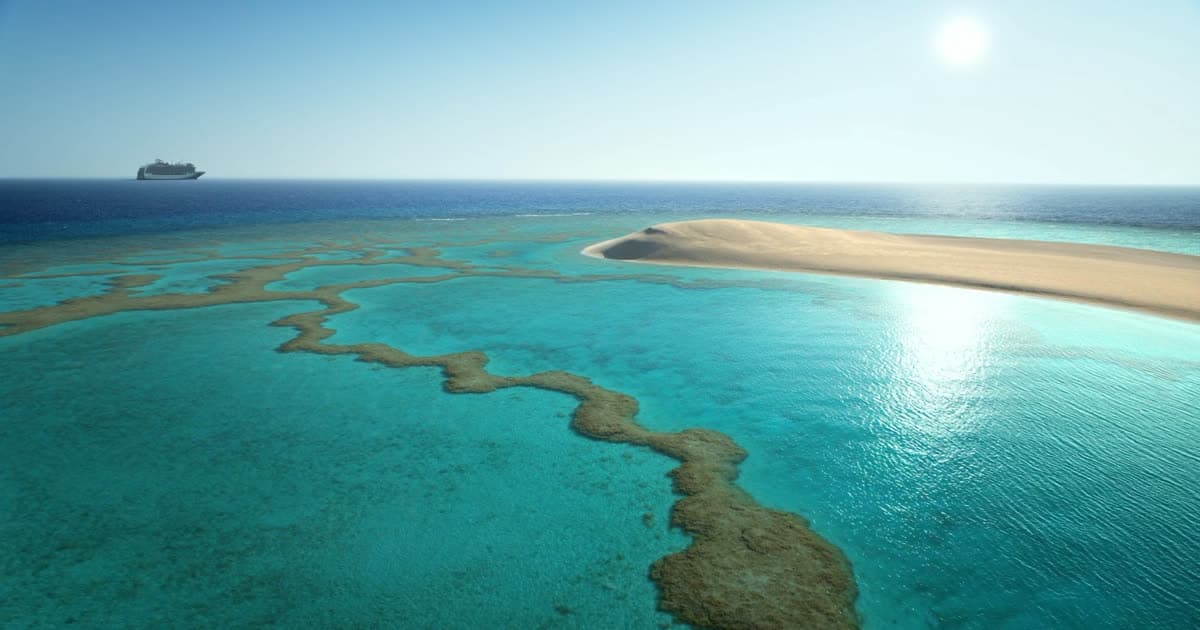
Great Barrier Reef access from a cruise ship is limited. Ships cannot approach the reef itself; you reach it by catamaran from Cairns or Airlie Beach on a 90-minute transfer, which makes for a long day. The reef is genuinely worth it, but understand what the day involves.
- Sydney round-trips, Queensland reef sailings, South Pacific and Tasman crossings.
- Sydney's Circular Quay terminal is the best-located cruise terminal anywhere.
- Reef access requires a 90-minute catamaran transfer from Cairns or Airlie Beach.
- Two separate weather calendars: temperate south and tropical north.
The best time to go
For southern Australia and Tasmania, November through March. For tropical Queensland and the reef, May through October. There is a genuine overlap in October and November when both work reasonably.
October and November are our reviewers' recommendation for a mixed itinerary: warm enough in the south, dry enough in the north, and before the stinger season closes tropical beaches.
| Month | Sydney and south | Tropical Queensland | Fares | Verdict |
|---|---|---|---|---|
| October to November | Warm, 72 to 78F | Dry, warm, stingers arriving | Moderate | The best mixed-itinerary window |
| December to February | Hot, 79 to 86F, peak season | Wet, humid, cyclone risk, stingers | Highest | Great in the south, poor in the north |
| March to April | Warm, 75 to 81F, settling | Wet season ending | Moderate | Good value in the south |
| May to August | Cool, 60 to 68F | Dry, 77 to 82F, no stingers | Lowest | The best reef window; cool in Sydney |
| September | Mild, 68 to 72F | Dry, warm, minke whales on the reef | Low | Excellent value across both regions |
The ports, honestly assessed
Australian ports are widely spaced, so itineraries carry more sea days than European ones. The ports themselves are almost all walkable or a short transfer.
SydneyAustralia
Circular Quay puts you between the Opera House and the Harbour Bridge. The best-located cruise terminal in the world; arrive three days early.
MelbourneAustralia
Station Pier is 25 minutes from the centre by tram. Great Ocean Road is a full-day excursion and worth it.
BrisbaneAustralia
The new international terminal is 45 minutes from the centre. Best used as an embarkation port for reef and South Pacific sailings.
HobartAustralia
The pier is in the centre. MONA, the Museum of Old and New Art, is a 25-minute ferry and is one of the best museums in the southern hemisphere.
CairnsAustralia
The Great Barrier Reef access port. A reef day is a 90-minute catamaran each way; the Kuranda railway is the alternative.
Airlie BeachAustralia
Whitsundays gateway. Whitehaven Beach is genuinely one of the best beaches in the world and needs a boat transfer.
Port DouglasAustralia
A tender port. Closer reef access than Cairns and the Daintree rainforest is 45 minutes north.
AdelaideAustralia
Outer Harbor is 40 minutes by train. Barossa Valley wine tours are the standard excursion and are good.
FremantleAustralia
Perth's port, 30 minutes by train. Rottnest Island and the quokkas are the memorable day.
DarwinAustralia
On repositioning and Asia itineraries. Litchfield National Park is the excursion; the city itself is modest.
Weather, month by month
The figures below are for Sydney, which is the reference point for most Australian itineraries. Cairns runs 10 to 15 degrees warmer and considerably more humid in summer; Hobart runs 8 to 12 degrees cooler.
| Month | High | Low | Sea | Rain days | Notes |
|---|---|---|---|---|---|
| October | 72F | 57F | 66F | 9 | Spring. Warm days, cool evenings, good value. |
| November | 76F | 61F | 69F | 9 | The best all-round month for a mixed itinerary. |
| December | 79F | 65F | 72F | 8 | Peak season begins. Sydney is at its best. |
| January | 82F | 68F | 74F | 8 | Hottest month and the peak of Australian school holidays. |
| February | 82F | 68F | 75F | 11 | Warmest sea. Wettest of the summer months. |
| March | 79F | 66F | 75F | 11 | Still warm, crowds easing after school returns. |
| April | 74F | 61F | 73F | 10 | Autumn. Pleasant and much cheaper. |
| September | 68F | 53F | 64F | 8 | Early spring. Minke whales on the Great Barrier Reef. |
What it actually costs
Australian cruise fares are moderate; the flight is what makes this an expensive trip for North Americans. A 15-hour flight from Los Angeles at $1,400 to $2,400 return frequently exceeds the cruise fare itself.
That argues strongly for a longer cruise. If you are flying 15 hours, a fourteen-night itinerary costs proportionally far less than a seven-night one once the flight is amortised.
| Cost item | Budget | Mid-range | Premium |
|---|---|---|---|
| Cruise fare, per night | $90 to $130 | $155 to $215 | $260 to $420 |
| Line and cabin | Carnival or Royal Caribbean, interior | Princess or Celebrity, balcony | Cunard, Oceania or Silversea |
| Flights from North America | $1,400 to $2,400 | $1,400 to $2,400 | $1,400 to $2,400 |
| Pre-cruise hotel, three nights | $330 to $500 | $500 to $850 | $850 to $1,500 |
| Taxes and port fees | $260 to $380 | $280 to $420 | $300 to $460 |
| Gratuities | $132 to $192 | $204 to $252 | Often bundled |
| Excursions and reef day | $400 self-guided plus reef | $900 to $1,500 | $1,200 to $2,000 |
| Realistic total | $3,600 to $5,600 | $5,200 to $8,000 | $7,000 to $11,000 |
Popular itineraries
Australian itineraries divide into five recognisable shapes, and the flight cost argues for choosing a longer one.
Sydney and Tasmania, eight nights
from $1,240 per person
8 nights from Sydney
Calls: Melbourne, Hobart, Port Arthur, Two sea days
Best for: A short introduction to southern Australia
Queensland and the Great Barrier Reef, ten nights
from $1,550 per person
10 nights from Brisbane or Sydney
Calls: Airlie Beach, Cairns, Port Douglas, Willis Island
Best for: Reef access and tropical Queensland
South Pacific from Sydney, twelve nights
from $1,680 per person
12 nights from Sydney
Calls: Noumea, Port Vila, Mystery Island, Lifou
Best for: Island hopping without leaving the region
Australia and New Zealand, fourteen nights
from $2,380 per person
14 nights from Sydney or Auckland
Calls: Melbourne, Hobart, Milford Sound, Dunedin, Wellington
Best for: The best value once the long flight is amortised
Circumnavigation of Australia, twenty-eight nights
from $4,760 per person
28 nights from Sydney
Calls: Fremantle, Darwin, Cairns, Adelaide, Hobart
Best for: Seeing the whole country by sea
Travel tips from our sailings
Arrive in Sydney three days early. A 15-hour flight plus a 17-hour time difference is not something to sleep off in one night.
Choose your season by region. November to March for Sydney and Tasmania; May to October for the reef and tropical Queensland.
If you are flying from North America, book a longer cruise. The flight cost per cruise night halves when you go from seven nights to fourteen.
Great Barrier Reef day trips from Cairns involve a 90-minute catamaran each way. Take seasickness medication; the transfer is often choppy.
Box jellyfish season runs roughly November to May in tropical Queensland. Swim only in stinger-net enclosures or wear a stinger suit.
Check whether your ship uses Circular Quay or White Bay in Sydney. Circular Quay is central and spectacular; White Bay is neither.
Australian sun is genuinely harsher than northern hemisphere sun. Factor 50 and a hat are not optional.
Australia requires an Electronic Travel Authority or visa for most nationalities, applied for before departure.
Australia packing essentials
- Factor 50 sunscreen and a broad-brimmed hat; the UV index in Australia routinely exceeds anything in Europe or North America.
- A rash vest or stinger suit for tropical Queensland swimming between November and May.
- Layers for Tasmania and Melbourne, which can be 15 degrees cooler than Sydney on the same day.
- Reef-safe sunscreen, which is expected on Great Barrier Reef operators.
- A Type I power adapter, which is used in Australia and nowhere in Europe or North America.
- Insect repellent for Queensland and the Northern Territory.
- Seasickness medication for the reef catamaran transfer.
The full list, including the banned-items rules, is in our cruise packing guide.
Terms worth knowing
- Stinger season
- The period from roughly November to May when box jellyfish and Irukandji are present in tropical Queensland waters, making unprotected swimming unsafe outside netted enclosures.
- Circular Quay
- Sydney's Overseas Passenger Terminal, sitting between the Opera House and the Harbour Bridge. Larger ships use White Bay instead, which is further from the centre.
- Electronic Travel Authority
- Australia's pre-approved entry permit, required by most nationalities before travel and applied for online in advance.
- The Whitsundays
- A group of 74 islands off the Queensland coast, reached from Airlie Beach, including Whitehaven Beach with its silica sand.
| Factor | Sydney and south | Tropical Queensland |
|---|---|---|
| Best months | November to March | May to October |
| Worst months | June to August, cool | January to March, wet and cyclonic |
| Summer temperature | 79 to 86F, comfortable | 88 to 93F, very humid |
| Swimming hazards | None significant | Box jellyfish November to May |
| Main attraction | Cities, Tasmania, wine regions | Great Barrier Reef, rainforest |
| Departure port | Sydney, Melbourne | Brisbane, Cairns |
Which Australia cruise should you book?
Australia's two weather calendars make the timing decision more consequential than the ship or line.
Sail October or November
Choose it when: You want a mixed itinerary covering both Sydney and Queensland. It is the only genuine overlap window.
Sail May to September for the reef
Choose it when: The Great Barrier Reef is the point of the trip. Dry, warm, no stingers and minke whales in September.
Book a fourteen-night itinerary or longer
Choose it when: You are flying from North America. The flight cost per cruise night halves against a seven-night sailing.
Combine Australia and New Zealand
Choose it when: You want the best value from a long-haul flight. A Tasman crossing adds Milford Sound and the New Zealand coast.
Check your Sydney terminal
Choose it when: You are booking a Sydney departure. Circular Quay is central and spectacular; White Bay is 25 minutes out.
Price Australia sailings
Realistic mid-range trips run about $185 per person per night all-in. Check current fares, then verify against the cost table above before booking.
Speak to a cruise specialist. Daily, 8am to 11pm ET.
Australia cruise questions
When is the best time to cruise Australia?
It depends on the region. For Sydney, Melbourne and Tasmania, November through March gives 76 to 82 Fahrenheit and settled weather. For tropical Queensland and the Great Barrier Reef, May through October is far better: dry, 77 to 82 Fahrenheit and outside stinger season. October and November are the overlap window that suits a mixed itinerary.
Can you visit the Great Barrier Reef on a cruise?
Yes, but not directly. Cruise ships cannot approach the reef itself, so access is by catamaran from Cairns, Port Douglas or Airlie Beach, a 90-minute transfer each way. A reef day costs $180 to $280 per person and takes most of the port call. It is worth doing, but expect a long day and take seasickness medication for the transfer.
How much does an Australia cruise cost?
Twelve-night balcony fares run $155 to $215 per person per night, so $1,860 to $2,580 for the cruise. The dominant cost for North Americans is the flight at $1,400 to $2,400 return. A realistic mid-range total including hotels, taxes, gratuities and excursions is $5,200 to $8,000 per person.
What is stinger season in Australia?
Box jellyfish and Irukandji are present in tropical Queensland waters from roughly November to May, making unprotected swimming genuinely dangerous. During that window, swim only inside stinger-net enclosures or wear a full stinger suit, which reef operators provide. Southern Australian waters, including Sydney and Tasmania, are unaffected.
Do you need a visa to cruise Australia?
Most nationalities, including US and Canadian citizens, need an Electronic Travel Authority or eVisitor permit obtained online before departure. It is quick and inexpensive but must be arranged in advance; you cannot obtain one on arrival. Check requirements for every country on your itinerary, since South Pacific sailings may add further requirements.
Is a longer Australia cruise better value?
Yes, materially. The flight from North America costs $1,400 to $2,400 and is fixed regardless of cruise length. On a seven-night cruise that adds $200 to $340 per cruise night; on a fourteen-night cruise it adds $100 to $170. If you are making the journey at all, a longer itinerary is significantly better value per day.
About the author
Ports and Destinations Writer
Lena Hartley covers the parts of a cruise that happen off the ship: departure port logistics, shore excursions, weather windows and whether a port call is worth leaving the ship for at all.
48 sailings logged across 8 cruise lines.
This page was fact-checked by Captain Alberto Ruiz, marine and operations reviewer, on . Prices and policies are re-checked against cruise line sources at least every 90 days. Read our editorial policy.