Europe · Cruise destination guide
Northern Europe Cruise Guide: Fjords, Iceland and Midnight Sun
Short answer
What should you know before booking a Northern Europe cruise?
Northern Europe cruises run May to September, with the Norwegian fjords, Iceland and the British Isles as the three main routes. June and July bring near-continuous daylight above the Arctic Circle. Balcony fares run $175 to $310 per person per night, and weather is cool and changeable throughout. The fjord runs are the scenery product, Iceland adds the geology and the British Isles add the cities, so route choice matters more than ship choice here. Pack for the sixties even in July: the near-continuous daylight is the season's gift, warm evenings are not. This is scenery-from-the-ship cruising, so the cabin you pick matters more than on port-heavy routes.
Key takeaways
- Three distinct routes: Norwegian fjords, Iceland and the British Isles, each a different holiday.
- The midnight sun is genuine above the Arctic Circle from late May to late July.
- Weather is cool and changeable; expect 55 to 65 Fahrenheit and rain in any month.
- Fjord ports are small and beautiful; Geiranger and Flam are the two that justify a full day.
- Iceland itineraries are the fastest-growing segment and the most weather-dependent.
Overview
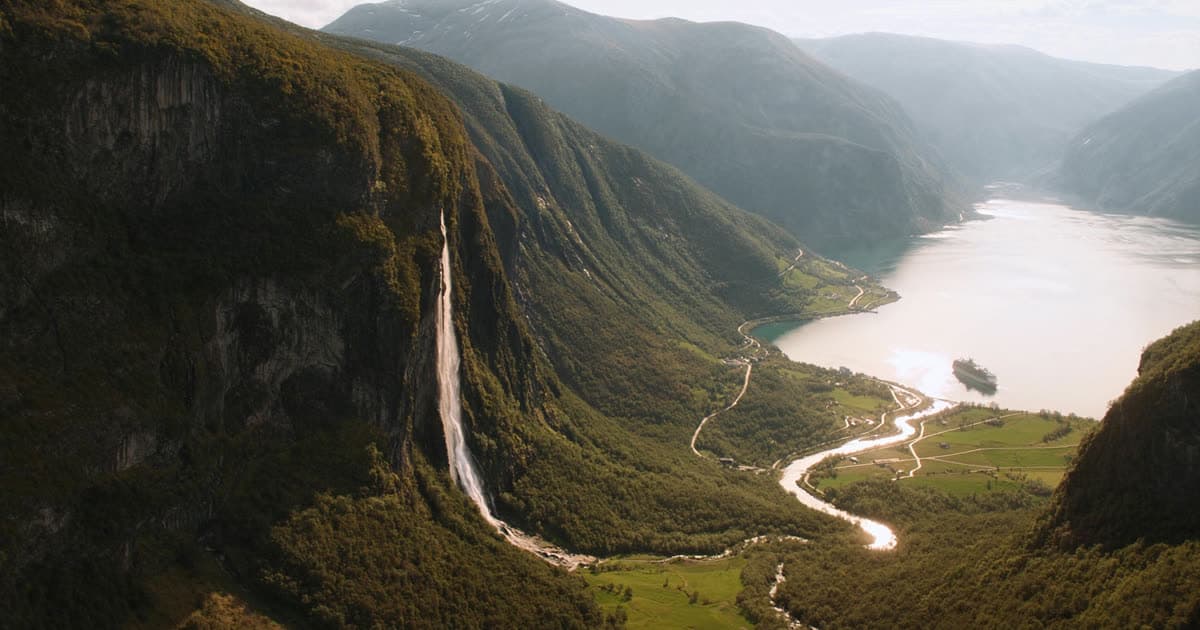
Northern Europe is where cruising is at its most scenic and least predictable. A Norwegian fjord sailing spends most of its days inside sheltered water with mountains rising 3,000 feet directly from the ship, which is a genuinely different experience from open-ocean cruising.
The three route families are worth separating. Norwegian fjord itineraries are the classic, sailing from Southampton, Amsterdam or Copenhagen into Geiranger, Flam and the Lofoten Islands. Iceland itineraries circle the island with calls at Reykjavik, Akureyri and Isafjordur. British Isles itineraries circumnavigate Britain and Ireland with calls at Edinburgh, Dublin, Belfast and the Scottish islands.
The common factor is weather. This is not a warm-weather region. Expect 55 to 65 Fahrenheit, frequent rain and wind, and pack accordingly. What you get in return is scenery that no Caribbean itinerary comes close to.
The season is short and clearly defined. Ships arrive in May and leave by late September, with a handful of northern lights sailings in the winter months from specialist operators such as Hurtigruten, which is a coastal ferry service rather than a cruise line in the usual sense.
Above the Arctic Circle, roughly 66 degrees north, the sun does not set between late May and late July. In Tromso that means genuine 24-hour daylight, which is disorienting and remarkable in equal measure. Bring an eye mask.
Norway is expensive. A beer in Geiranger costs about 12 dollars and a taxi ride can be 60. Budget more for port days here than anywhere else in Europe, or plan to walk, which in the fjord ports is genuinely the best option.
- Season runs May to late September, with almost nothing outside it.
- Midnight sun above the Arctic Circle from late May to late July.
- Norway is among the most expensive countries in the world for port-day spending.
- Fjord scenic cruising happens throughout the day, not just at ports.
The best time to go
June and July are the peak months for daylight and the mildest weather. May and September are cheaper, quieter and carry more weather risk, though the fjords are arguably more atmospheric with low cloud and waterfalls at full flow from snowmelt.
For Iceland specifically, July and August are the reliable months; May and September sailings see more port cancellations from weather.
| Month | Temperature | Daylight | Fares | Verdict |
|---|---|---|---|---|
| May | 50 to 58F, changeable | 18 to 20 hours | Low | Waterfalls at peak flow from snowmelt |
| June | 56 to 64F, mildest | 20 to 24 hours | Rising | The best month for the fjords |
| July | 60 to 68F, warmest | 20 to 24 hours | Highest | Warmest and busiest |
| August | 58 to 66F, wetter | 16 to 19 hours | High | Good for Iceland, wetter in Norway |
| September | 50 to 58F, first autumn colour | 12 to 14 hours | Low | Excellent value, more weather risk |
The ports, honestly assessed
Northern European ports are small and walkable, which is the opposite of the Mediterranean. Most need no excursion at all.
GeirangerNorway
The most spectacular fjord arrival in Norway. A tender port. The Dalsnibba viewpoint excursion is one of the few genuinely worth booking.
FlamNorway
The Flam Railway is the best rail journey in Europe and the reason ships call here. Book through the ship; independent tickets sell out.
BergenNorway
The Bryggen wharf is a UNESCO site and a ten-minute walk from the ship. The Floibanen funicular is a $16 self-guided highlight.
AlesundNorway
Art nouveau town rebuilt after a 1904 fire. The 418 steps up Aksla give the best free view in Norway.
TromsoNorway
Above the Arctic Circle. The Arctic Cathedral and the cable car are both short walks or cheap buses.
ReykjavikIceland
The port is 20 minutes from the centre. The Golden Circle needs a full day; the Blue Lagoon needs pre-booking weeks ahead.
AkureyriIceland
Northern Iceland's gateway. Godafoss waterfall and Lake Myvatn are the standard excursions and are both worthwhile.
IsafjordurIceland
A small Westfjords port with dramatic surroundings. Weather-dependent; calls are cancelled several times a season.
Edinburgh via South QueensferryUnited Kingdom
A tender port with a 40-minute transfer. Edinburgh warrants the effort.
DublinIreland
The port is 20 minutes from the centre by shuttle. Easily self-guided.
CopenhagenDenmark
One of the best embarkation cities in Europe. Arrive two days early; the city is worth it.
AmsterdamNetherlands
The cruise terminal is a 15-minute walk from Centraal Station. The most convenient major embarkation port in Europe.
Weather, month by month
Northern Europe weather is cool, wet and highly changeable. The figures below are Norwegian fjord averages; Iceland runs three to five degrees cooler and considerably windier.
| Month | High | Low | Sea | Rain days | Notes |
|---|---|---|---|---|---|
| May | 55F | 42F | 47F | 12 | Snowmelt at peak, so waterfalls are at their most dramatic. |
| June | 62F | 48F | 52F | 12 | Mildest and driest month. Midnight sun above the Arctic Circle. |
| July | 66F | 53F | 57F | 13 | Warmest month. Busiest ports and highest fares. |
| August | 64F | 52F | 58F | 15 | Warmest sea temperature. Wetter than July. |
| September | 55F | 45F | 55F | 17 | Autumn colour arrives. Best value, most weather risk. |
What it actually costs
Northern Europe fares sit above the Mediterranean because the season is short and the ships deployed are generally newer and better suited to cool weather.
Port-day spending is the real difference. Norway is genuinely expensive, and Iceland more so. A modest lunch ashore in Geiranger costs what a good dinner costs in Naples.
| Cost item | Budget | Mid-range | Premium |
|---|---|---|---|
| Cruise fare, per night | $105 to $150 | $175 to $240 | $290 to $450 |
| Line and cabin | MSC or Costa, interior | Princess or Norwegian, balcony | Celebrity, Oceania or Silversea |
| Flights to the UK or Europe | $620 to $1,050 | $620 to $1,050 | $620 to $1,050 |
| Pre-cruise hotel, two nights | $220 to $340 | $340 to $560 | $560 to $980 |
| Taxes and port fees | $260 to $380 | $280 to $420 | $300 to $460 |
| Gratuities | $100 to $160 | $170 to $210 | Often bundled |
| Excursions and port spending | $300 self-guided | $900 to $1,500 | $1,200 to $2,000 |
| Realistic total | $2,550 to $3,900 | $4,300 to $6,200 | $5,900 to $9,500 |
Popular itineraries
Northern Europe itineraries split cleanly into four shapes, and the route matters far more than the ship.
Norwegian fjords, seven nights
from $1,050 per person
7 nights from Southampton or Amsterdam
Calls: Bergen, Flam, Geiranger, Alesund, Stavanger
Best for: The classic fjord itinerary
North Cape and Arctic Circle, fourteen nights
from $2,380 per person
14 nights from Southampton
Calls: Tromso, Honningsvag, Lofoten Islands, Trondheim, Bergen
Best for: Midnight sun above the Arctic Circle
Iceland circumnavigation, ten to twelve nights
from $2,035 per person
11 nights from Reykjavik or Southampton
Calls: Reykjavik, Akureyri, Isafjordur, Seydisfjordur, Heimaey
Best for: The fastest-growing Northern Europe route
British Isles circumnavigation, twelve nights
from $2,100 per person
12 nights from Southampton
Calls: Edinburgh, Belfast, Dublin, Cork, Liverpool, Orkney
Best for: History and landscape without a long-haul transfer
Norway and Iceland combined, sixteen nights
from $3,040 per person
16 nights from Southampton or Amsterdam
Calls: Bergen, Geiranger, Reykjavik, Akureyri, Faroe Islands
Best for: Combining the two great northern routes
Travel tips from our sailings
Pack for rain and wind in every month. A waterproof shell matters more than a thick coat.
In the fjord ports, walk. Geiranger, Flam, Alesund and Bergen are all small and the free views are the best ones.
Book the Flam Railway through the ship. Independent tickets on cruise days sell out weeks ahead.
Bring an eye mask for Arctic sailings in June and July. Cabin curtains do not fully block a sun that never sets.
Norwegian port-day prices are genuinely high. Eat lunch onboard and spend ashore only on what you cannot get on the ship.
Iceland port calls at Isafjordur and Seydisfjordur are weather-dependent and are cancelled several times each season.
Book the Blue Lagoon weeks ahead if it matters to you; walk-up availability on cruise days is effectively zero.
Amsterdam and Copenhagen are excellent embarkation cities. Arrive two days early rather than one.
Northern Europe packing essentials
- A waterproof, windproof shell with a hood. This is the single most important item.
- Thermal base layers for Arctic Circle sailings, even in July.
- Waterproof walking shoes with grip for wet fjord paths and Icelandic lava fields.
- An eye mask for midnight sun sailings.
- Sunglasses; glare off water and snow is severe when the sun is out.
- A small foldable umbrella for city days in Britain and Ireland.
- Swimwear for Icelandic geothermal pools, which are the best value activity in the country.
The full list, including the banned-items rules, is in our cruise packing guide.
Terms worth knowing
- Midnight sun
- The period above the Arctic Circle, roughly late May to late July, when the sun does not set. Tromso and North Cape experience genuine 24-hour daylight.
- Fjord
- A deep, narrow inlet carved by glacial action, with steep sides rising directly from the water. Geirangerfjord and Naeroyfjord are UNESCO listed.
- Scenic cruising
- Time spent sailing through notable scenery rather than in port, which on Norwegian fjord itineraries can occupy several hours of most days.
- Hurtigruten
- Norway's coastal express service, a working ferry operating year round along the Norwegian coast, distinct from conventional cruise ships.
| Factor | Norwegian fjords | Iceland | British Isles |
|---|---|---|---|
| Typical length | Seven to fourteen nights | Ten to twelve nights | Twelve nights |
| Departs from | Southampton, Amsterdam | Reykjavik, Southampton | Southampton |
| Main appeal | Fjord scenery, scenic cruising | Volcanic landscape, waterfalls | History, cities, coastline |
| Weather risk | Moderate | High, port cancellations common | Moderate |
| Self-guided potential | Excellent, ports are tiny | Limited, sites are remote | Excellent, good transport |
| Lead-in balcony fare | $1,050 | $2,035 | $2,100 |
| Port-day costs | Very high | Very high | Moderate |
Which Northern Europe cruise should you book?
The three routes are genuinely different holidays. Pick by what you want to look at.
Norwegian fjords
Choose it when: You want continuous scenery from the ship rather than a series of city day trips. Sail in June for the best combination of daylight and mild weather.
Iceland
Choose it when: You want volcanic landscape and are willing to accept that one or two ports may be cancelled for weather.
Skip it if: A cancelled port would ruin the trip for you.
British Isles
Choose it when: You want history and cities without a long-haul flight beyond London, and you value good public transport for self-guided days.
A North Cape sailing
Choose it when: The midnight sun is the point. Book late June for genuine 24-hour daylight above the Arctic Circle.
Sail in May or September
Choose it when: Value matters. Fares drop sharply, and May has the most dramatic waterfalls of the year from snowmelt.
Price Northern Europe sailings
Realistic mid-range trips run about $205 per person per night all-in. Check current fares, then verify against the cost table above before booking.
Speak to a cruise specialist. Daily, 8am to 11pm ET.
Northern Europe cruise questions
When is the best time for a Norwegian fjords cruise?
June offers the best combination: mild temperatures around 62 Fahrenheit, the lowest rainfall of the season, and near-continuous daylight. May is cheaper and has the most dramatic waterfalls because snowmelt peaks then. September is the best value but carries more weather risk and considerably shorter days.
How cold is a Northern Europe cruise?
Cool rather than cold. Norwegian fjord temperatures run 55 to 66 Fahrenheit between May and September, Iceland three to five degrees cooler and windier. Rain falls on roughly 12 to 17 days a month throughout the season. A waterproof windproof shell matters far more than a heavy winter coat.
How much does a Northern Europe cruise cost?
Ten-night balcony fares run $175 to $240 per person per night on mainstream lines, or $1,750 to $2,400 for the cruise. Add transatlantic flights of $620 to $1,050, a pre-cruise hotel, port taxes and excursions for a realistic mid-range total of $4,300 to $6,200 per person. Norway's high port-day prices push this higher than the Mediterranean.
Can you see the midnight sun on a cruise?
Yes, on itineraries reaching above the Arctic Circle at 66 degrees north, which means North Cape, Tromso and Lofoten sailings between late May and late July. In Tromso in late June the sun genuinely does not set. Bring an eye mask, because cabin curtains rarely block it fully.
Is Iceland worth cruising rather than flying to?
It depends on what you want. A cruise circumnavigation reaches Isafjordur, Seydisfjordur and Akureyri, which are hard to combine on a land trip, and removes the driving. A land trip gives you the interior, the highlands and far more time at each site. Cruise calls are also the most weather-vulnerable in Europe, with several cancellations each season.
Do you need excursions in the Norwegian fjords?
Less than anywhere else in Europe. Geiranger, Flam, Alesund and Bergen are all small enough to walk, and the best views, such as the 418 steps up Aksla in Alesund or the Bryggen wharf in Bergen, are free. The two exceptions worth booking are the Flam Railway and the Dalsnibba viewpoint from Geiranger.
About the author
Ports and Destinations Writer
Lena Hartley covers the parts of a cruise that happen off the ship: departure port logistics, shore excursions, weather windows and whether a port call is worth leaving the ship for at all.
48 sailings logged across 8 cruise lines.
This page was fact-checked by Captain Alberto Ruiz, marine and operations reviewer, on . Prices and policies are re-checked against cruise line sources at least every 90 days. Read our editorial policy.