Cruise Types
Expedition Cruises: Ice Class, Zodiacs and What You Get
Short answer
Is this style of cruising right for you?
Expedition ships carry 100 to 264 guests, use zodiacs to land where there are no ports, and carry expedition teams of 20 to 30 naturalists. Ice class ratings determine where a ship can operate. Antarctica costs $7,900 to $22,000 per person for eleven nights; the Galapagos and Arctic are similar per night.
Key takeaways
- Expedition ships carry 100 to 264 guests and land passengers by zodiac, not by gangway.
- Ice class ratings, from Polar Class 6 upward, determine which waters a ship can enter.
- Expedition teams of 20 to 30 naturalists, scientists and guides replace conventional entertainment.
- Antarctica landing rules limit ships to 500 passengers and 100 people ashore at once.
- Nothing is guaranteed: weather, ice and wildlife determine each day's plan.
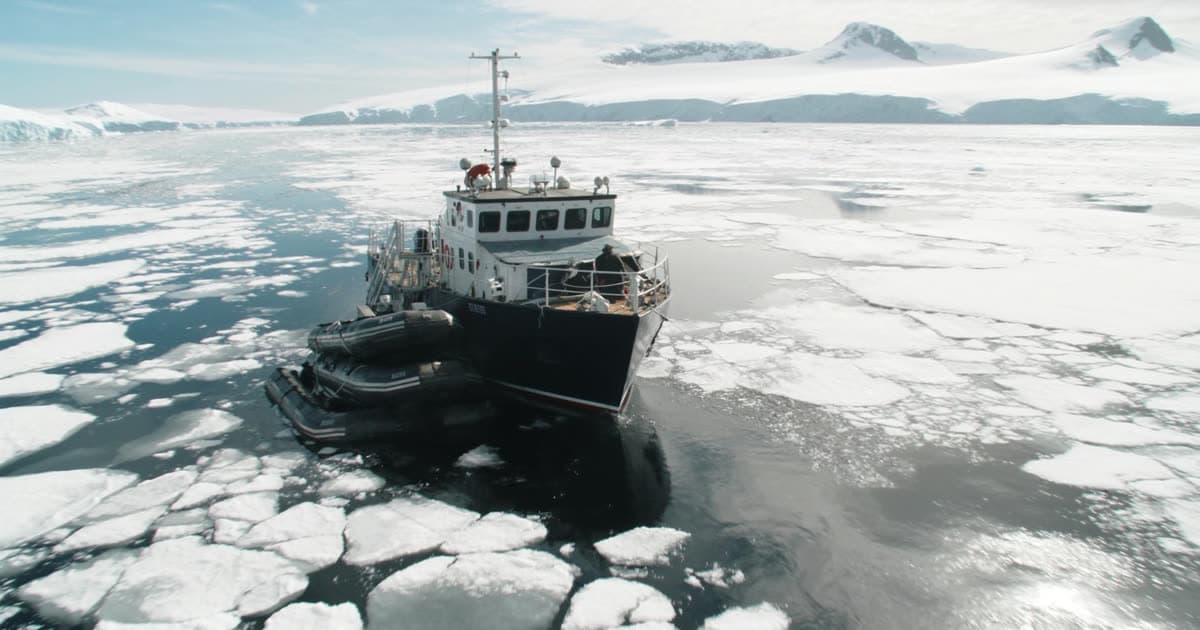
Expedition cruising is a different activity from cruising, sharing only the ship. There is no theatre, no casino and often no pool. Instead there is a team of naturalists, a fleet of zodiacs, a daily briefing, and an itinerary that changes according to ice, weather and where the wildlife happens to be.
The defining feature is that you land where there are no docks. A zodiac takes ten passengers from the ship to a beach, a research station or an ice floe, and you step off into water in rubber boots. That capability is what the fare buys.
The segment has grown quickly and the word expedition is now applied loosely. This page sets out what genuinely distinguishes an expedition ship from a small cruise ship with a marketing department.
What actually makes a ship an expedition vessel
Four things: an ice-strengthened hull with a formal ice class rating, a zodiac fleet with a dedicated launching platform, an expedition team of trained specialists, and an operating model where the itinerary is provisional rather than fixed.
Ice class matters most in polar regions. Polar Class 6 permits summer and autumn operation in medium first-year ice, which covers the Antarctic Peninsula and much of the Arctic. Lower ratings such as 1A or 1B are ice-strengthened but not polar class, and are limited to lighter conditions.
The expedition team is the part that most affects your experience. A good team of 25 on a 200-guest ship means one specialist per eight passengers, giving you naturalists on every zodiac and lecturers who are genuinely researchers rather than presenters.
| Rating | What it permits | Typical use | Example ships |
|---|---|---|---|
| Polar Class 2 | Year-round in moderate multi-year ice | High Arctic, North Pole | Nuclear icebreakers |
| Polar Class 5 | Year-round in medium first-year ice | Deep Arctic, Northwest Passage | Purpose-built expedition ships |
| Polar Class 6 | Summer and autumn in medium first-year ice | Antarctic Peninsula, Svalbard | Silver Endeavour, Seabourn Venture |
| 1A Super | Ice-strengthened, light ice | Antarctic Peninsula in season | Many expedition ships |
| 1B or 1C | Lightly ice-strengthened | Shoulder-season polar, Alaska | Converted small cruise ships |
| No ice class | Open water only | Galapagos, tropics | Silver Origin |
What a landing day actually involves
You are woken by an announcement around 6.30am with the day's plan, which was decided that morning based on ice and weather. Breakfast, then a briefing on the site and its wildlife.
Landings run in groups. On a 200-guest ship in Antarctica, where only 100 people may be ashore at once, the ship runs two rotations of roughly 90 minutes each. You put on waterproof trousers and rubber boots, walk through a biosecurity scrub, and board a zodiac from a platform at the waterline.
Ashore you follow marked routes with naturalists positioned along them. Nothing is left behind, nothing is taken, and you keep prescribed distances from wildlife. Back aboard, boots are scrubbed again.
Afternoons repeat at a second site, or become zodiac cruising among ice and wildlife without landing. Evenings are a recap briefing and dinner.
- The day's plan is decided that morning based on ice and weather.
- Landings run in rotations where visitor numbers are capped.
- Biosecurity scrubbing before and after every landing is mandatory.
- Naturalists are positioned along marked routes ashore.
- Afternoons are a second landing or zodiac cruising among the ice.
The main expedition regions and what they cost
Antarctica is the largest market, running late October to early March from Ushuaia. Eleven-night sailings run $7,900 to $22,000 per person depending on operator.
The Arctic covers Svalbard, Greenland and the Northwest Passage, running June to September. Svalbard sailings run $8,000 to $18,000 for ten to twelve nights; Northwest Passage transits run $25,000 to $45,000 for three weeks.
The Galapagos runs year round with strict licensing. Seven-night sailings run $6,500 to $11,000, and the Ecuadorian naturalist guide requirement means guiding quality is consistently high.
Beyond these, the Kimberley coast of Australia, Papua New Guinea and the Russian Far East are the growing frontiers.
| Region | Season | Nights | Typical cost | Highlight |
|---|---|---|---|---|
| Antarctic Peninsula | Late Oct to early Mar | 10 to 12 | $7,900 to $22,000 | Penguin colonies, ice, whales |
| South Georgia and Antarctica | Nov to Feb | 18 to 22 | $16,800 to $38,000 | King penguin colonies of 200,000 |
| Svalbard | Jun to Sep | 10 to 12 | $8,000 to $18,000 | Polar bears and walrus |
| Greenland | Jul to Sep | 12 to 16 | $11,000 to $24,000 | Ice fjords and Inuit settlements |
| Northwest Passage | Aug to Sep | 18 to 24 | $25,000 to $45,000 | The full transit, weather permitting |
| Galapagos | Year round | 7 | $6,500 to $11,000 | Endemic wildlife at close range |
How to choose an expedition operator
Ask four questions. What is the ice class? How many guests, and therefore how many landing rotations per site? How large is the expedition team relative to guests? And what is included, particularly zodiac cruising, kayaking and camping.
Guest count is the most consequential. A 100-guest ship lands everyone in one rotation; a 200-guest ship needs two; a 400-guest ship needs four and each guest gets less time ashore. In Antarctica, ships over 500 guests cannot land anyone at all.
Expedition team ratio is the quality signal. One specialist per eight to ten guests is good; one per twenty is thin.
- Ice class determines where the ship can legally and safely operate.
- Guest count determines how many landing rotations and how much time ashore.
- Expedition team ratio of one per eight to ten guests indicates a serious operation.
- Ask what is included: kayaking, camping and submarine dives are often extra.
- In Antarctica, ships over 500 guests cannot land passengers at all.
Terms worth knowing
- Zodiac
- A rigid-hulled inflatable boat carrying roughly ten passengers, used to land guests where there are no docks and to cruise among ice and wildlife.
- Ice class
- A formal hull rating indicating what ice conditions a vessel may operate in. Polar Class 6 permits summer and autumn operation in medium first-year ice.
- Expedition team
- The naturalists, scientists, historians and guides aboard an expedition ship, typically 20 to 30 people, who lead landings and deliver the lecture programme.
- IAATO
- The International Association of Antarctica Tour Operators, whose rules limit landings to ships of 500 or fewer passengers and to 100 people ashore at one site.
| Factor | Expedition ship | Small cruise ship |
|---|---|---|
| Guests | 100 to 264 | 450 to 750 |
| Landing method | Zodiac, no dock required | Gangway or tender to a dock |
| Itinerary | Provisional, decided daily | Fixed and published |
| Specialist staff | 20 to 30 naturalists | One or two lecturers |
| Entertainment | Briefings and lectures | Theatre, music, casino |
| Ice capability | Polar Class or 1A rated | None or minimal |
| Cost per night | $720 to $2,000 | $310 to $960 |
Choosing an expedition cruise
Four questions decide almost everything about the quality of an expedition sailing.
A ship under 200 guests
Choose it when: Time ashore matters. Fewer guests means fewer landing rotations and more time at each site.
A Polar Class 6 vessel
Choose it when: You are going to Antarctica or the high Arctic. Lower ratings limit where and when the ship can operate.
An operator with one specialist per eight to ten guests
Choose it when: The lecture and guiding programme matters to you. This ratio is the clearest quality signal.
The Galapagos
Choose it when: You want expedition-style wildlife access without polar conditions, cold or a Drake Passage crossing.
A conventional small ship instead
Choose it when: You want a fixed itinerary, a theatre and guaranteed port calls. Expedition cruising promises none of these.
Put this research to work
Compare current fares against the numbers on this page, and check the related guides below before adding packages or excursions.
Speak to a cruise specialist. Daily, 8am to 11pm ET.
Frequently asked questions
What is an expedition cruise?
A small-ship voyage to a remote region, carrying 100 to 264 guests, using zodiacs to land passengers where there are no docks, and guided by an expedition team of 20 to 30 naturalists and scientists. The itinerary is provisional rather than fixed, changing daily according to ice, weather and wildlife.
What does ice class mean on an expedition ship?
It is a formal hull rating determining what ice conditions a vessel may operate in. Polar Class 6 permits summer and autumn operation in medium first-year ice, which covers the Antarctic Peninsula and Svalbard. Ratings such as 1A Super are ice-strengthened but not polar class and are limited to lighter conditions.
How much does an expedition cruise cost?
Antarctica runs $7,900 to $22,000 per person for ten to twelve nights, Svalbard $8,000 to $18,000, the Galapagos $6,500 to $11,000 for seven nights and a Northwest Passage transit $25,000 to $45,000 for three weeks. Mandatory medical evacuation insurance adds $250 to $600 for polar sailings.
How many passengers can an expedition ship land in Antarctica?
IAATO rules prohibit any ship carrying more than 500 passengers from landing anyone in Antarctica, and limit shore parties to 100 people at one site at a time. A 200-guest ship therefore runs two rotations of roughly 90 minutes each. Smaller ships land everyone faster and reach more sites per day.
What happens on an expedition landing day?
The day's plan is announced around 6.30am, decided that morning based on ice and weather. After a site briefing you put on waterproof trousers and rubber boots, pass through biosecurity scrubbing and board a zodiac from a waterline platform. Ashore you follow marked routes with naturalists positioned along them, then repeat the process in the afternoon at a second site.
Is an expedition cruise worth the cost?
If the destination is the point, yes, because there is no other way to reach most of these places. If you want a comfortable ship with a fixed itinerary and entertainment, expedition cruising will disappoint you: itineraries are provisional, sites get cancelled and the onboard programme is lectures rather than theatre.
About the author
Ports and Destinations Writer
Lena Hartley covers the parts of a cruise that happen off the ship: departure port logistics, shore excursions, weather windows and whether a port call is worth leaving the ship for at all.
48 sailings logged across 8 cruise lines.
This page was fact-checked by Captain Alberto Ruiz, marine and operations reviewer, on . Prices and policies are re-checked against cruise line sources at least every 90 days. Read our editorial policy.